Dangote Refinery Petrol Price Reduction: A Breath of Fresh Air for Nigerians?
- Introduction: The Impact of Dangote’s Price Cuts
- A New Era of Local Refining and Competition
- The Mechanics Behind the Dangote Petrol Price Reduction
- Impact on the Nigerian Economy and Consumers
- Challenges and the Road Ahead for Fuel Pricing
- Conclusion: Hope for Sustainable Price Stability
The Dangote Refinery petrol price reduction is a topic that has everyone talking in Nigeria. After years of fluctuating and often prohibitive fuel costs, the news of a significant price cut from a major local producer feels like a breath of fresh air for many citizens and businesses alike. My experience, like that of most Nigerians, has been one of constantly adjusting to rising fuel prices, impacting everything from transportation to the cost of basic goods. So, when I heard about the Dangote Refinery’s move, I was genuinely curious about what this could mean for our economy and daily lives. Let’s dive into the details of this development and explore its potential ripple effects.
For decades, Nigeria, despite being a major oil producer, has relied heavily on fuel imports, leading to dependency on global market fluctuations and significant government expenditure on subsidies. The history of fuel prices in Nigeria is a tumultuous one, marked by frequent increases and public outcry. The removal of fuel subsidies in May 2023, while aimed at long-term economic benefits, initially led to a sharp increase in pump prices, causing hardship for many. In this context, the Dangote Refinery’s entry into the market and its subsequent price adjustments represent a significant shift.
A New Era of Local Refining and Competition
The Dangote Petroleum Refinery, located in the Lekki Free Zone, is a game-changer. As Africa’s largest oil refinery and the world’s biggest single-train facility, it has the capacity to process 650,000 barrels of crude oil per day. This massive capacity means it can meet 100% of Nigeria’s requirement for all refined products and even have a surplus for export. This is a monumental step towards energy independence, a national priority for Nigeria.
Before the Dangote Refinery began producing petrol locally in September 2024, Nigeria’s public refineries were largely inactive, making imports essential. The new refinery’s operation introduces a new dynamic to the Nigerian fuel market, creating a competitive environment that was previously dominated by imports and the Nigerian National Petroleum Corporation Limited (NNPC).
The competition between Dangote Refinery and NNPC has been a key driver in the recent Dangote Refinery petrol price reduction. This competitive dynamic is a welcome change for Nigerian consumers who have long faced high fuel costs. We’re seeing a shift from a market dictated by import costs and subsidies to one influenced by local production and market forces.
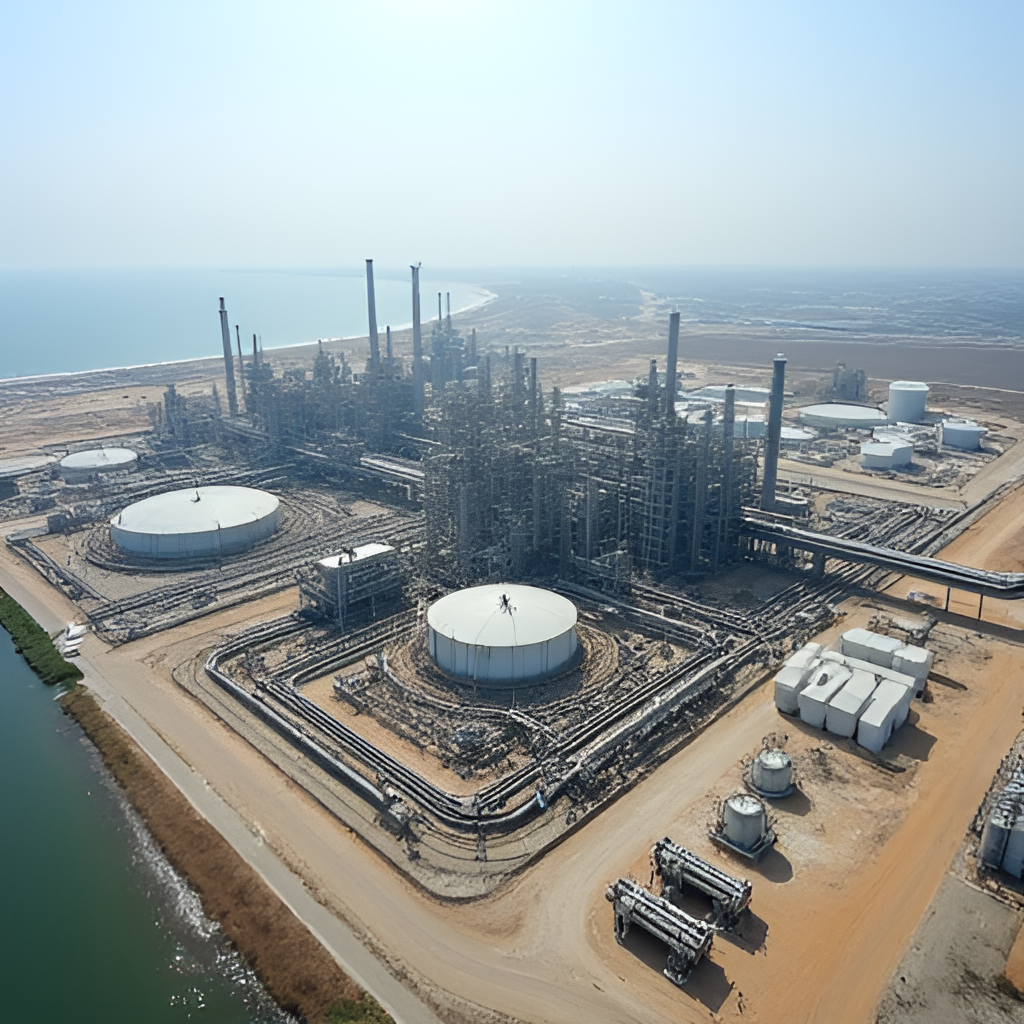
This image is a fictional image generated by GlobalTrendHub.
Understanding the Mechanics Behind the Price Cuts
The recent Dangote Refinery petrol price reduction hasn’t been a one-off event. We’ve seen a series of adjustments, with the price dropping from N950 to N890 per litre in February 2025 and further reductions to N835 and then N825 per litre in April and May 2025, respectively. These reductions are a direct response to various factors, including the positive outlook in global energy markets and a reduction in international crude oil prices.
The refinery’s ability to refine crude oil locally significantly reduces logistical challenges and the costs associated with importing refined products. This efficiency gain is a major factor enabling the price cuts. While the landing cost of imported petrol can be higher, the Dangote Refinery’s ex-depot price is becoming increasingly competitive. This puts pressure on importers and other marketers to adjust their prices to remain competitive.
It’s worth noting that the refinery loads out millions of litres every day, supplying the domestic market through a mixture of trucks and cargo deliveries. This efficient distribution network plays a crucial role in ensuring the reduced prices can reach consumers. As someone who’s followed the logistics challenges in Nigeria, seeing a more streamlined distribution process is definitely encouraging.
Impact on the Nigerian Economy and Consumers
The most immediate and tangible impact of the Dangote Refinery petrol price reduction is the potential relief it offers to Nigerian consumers. Fuel prices have a significant impact on the cost of transportation, goods, and services. A decrease in petrol prices can lead to a reduction in these costs, helping to ease the burden of inflation, which has been a major challenge in Nigeria.
Businesses across various sectors rely on fuel for their operations. Lower fuel costs can translate to reduced operating expenses, potentially leading to lower prices for consumers and increased profitability for businesses. This ripple effect can stimulate economic activity and contribute to overall economic growth.
Furthermore, the increased local refining capacity and the resulting price competition can reduce Nigeria’s dependence on foreign exchange for fuel imports. This can help to stabilize the naira and improve the country’s balance of payments. Experts believe that buying products from Dangote could save Nigeria significant amounts yearly.
This image is a fictional image generated by GlobalTrendHub.
Challenges and the Road Ahead for Fuel Pricing
While the Dangote Refinery petrol price reduction is a positive development, it’s not without its challenges. The ongoing price war between Dangote Refinery and other marketers, including NNPC, while beneficial for consumers in the short term, has raised concerns among some stakeholders, particularly private depot owners who have invested heavily in the import business.
There have also been discussions about the refinery’s capacity to meet the entire local demand and potential logistical bottlenecks in distribution. Ensuring that the benefits of the price reduction are effectively passed on to the final consumers at the pump remains a crucial aspect. Marketers play a vital role in the distribution chain, and their collaboration is essential to ensure the intended impact is felt nationwide.
The long-term sustainability of these lower prices will also depend on factors such as global crude oil prices and the stability of the exchange rate. While local refining reduces import dependency, the cost of crude oil, a primary input, is still subject to international market dynamics.
Despite these challenges, the entry of a major local player like the Dangote Refinery and its influence on pricing is a significant step towards a more stable and potentially more affordable fuel market in Nigeria. It underscores the importance of investing in local infrastructure and fostering competition to benefit the consumer.
Conclusion: Hope for Sustainable Price Stability
The Dangote Refinery petrol price reduction represents a pivotal moment in Nigeria’s fuel sector. It signifies a move towards greater energy independence and introduces healthy competition that can ultimately benefit consumers. While challenges remain in ensuring these price reductions translate to sustained affordability across the country, the potential positive impact on the Nigerian economy and the cost of living is undeniable. As someone who has witnessed the struggles caused by volatile fuel prices, I remain hopeful that this development marks the beginning of a new era of stable and fair fuel pricing for all Nigerians. The Dangote Refinery petrol price reduction is more than just a number; it’s a symbol of progress and the potential for a brighter economic future.