Nigerian Army: Guardian of the Nation
- Introduction to the Nigerian Army
- A Legacy of Service: Tracing the History
- Structure and Organization of Nigeria’s Military
- Defining Roles and Responsibilities
- Training and Capacity Building
- Major Challenges and Ongoing Operations
- Contributions to Peacekeeping
- Looking Ahead: Modernization and the Future
- Conclusion: The Enduring Importance of the Nigerian Army
- Frequently Asked Questions About the Nigerian Army
The Nigerian Army is the largest component of the Nigerian Armed Forces and serves as the nation’s primary land defense force. As someone who has closely followed Nigeria’s security landscape, I’ve developed a deep respect for the complex role this institution plays. The Nigerian Army is more than just a military branch; it’s a cornerstone of national security, tasked with defending territorial integrity, supporting civil authorities, and participating in international peacekeeping efforts. Since its origins in the 19th century, the Nigerian military has faced numerous challenges and undergone significant transformations, evolving to meet the dynamic security needs of a diverse nation.
Tracing the history of the Nigerian Army reveals a long and impactful journey, starting with the “Glover Hausas” in 1863. This small force, initially formed to protect British trade routes, evolved through various name changes and expanded roles under colonial rule, including participation in operations like the Asante War. By 1914, with the amalgamation of Nigeria, it became the Nigeria Regiment, West African Frontier Force. The transition to the Royal Nigerian Army occurred upon independence in 1960, finally becoming known simply as the Nigerian Army in 1963 when Nigeria became a republic. This historical foundation laid the groundwork for the institution we see today.
My experience studying military history tells me that understanding these origins is crucial to appreciating the present-day Nigerian military. The period of the Nigerian Civil War (1967-1970) marked a significant turning point, leading to a massive expansion in troop numbers, from around 8,000 to over 120,000 by the war’s end. This rapid growth, while necessary for national unity, also presented challenges in terms of officer-to-troop ratio and organizational structure. Post-war reorganization aimed to address some of these issues, structuring divisions to deemphasize regional lines. The army’s history is rich with engagements, both domestically and abroad, shaping its capabilities and doctrine over decades.
Understanding the structure of the Nigerian Army is key to grasping how this large institution operates. As the land force of the Nigerian Armed Forces, it is the largest of the three service branches, which also include the Nigerian Navy and Nigerian Air Force. The President of Nigeria serves as the Commander-in-Chief, with the Chief of Army Staff as the professional head. The Nigerian Army Council governs the army. Operationally, the army is divided into ten divisions, serving as the basic field formations across different geographic areas. There are also functionally organized combat arms (infantry, armoured) and combat support arms (artillery, engineers, signals, intelligence). Different commands and units exist to manage specific aspects of operations and administration.
It’s a complex hierarchy, reflecting the multifaceted responsibilities the army shoulders. From infantry corps handling frontline operations to the signals corps managing vital communications, each part plays a crucial role. The organizational structure is designed to facilitate both national defense and internal security operations. In my observation, this structure, while having evolved over time, is constantly being reviewed to adapt to contemporary security threats.
The core responsibilities of the Nigerian Army are outlined in the nation’s constitution. Primarily, these involve defending Nigeria from external aggression and maintaining its territorial integrity. This means securing land borders and protecting strategic national assets.
Beyond external defense, the Nigerian Army plays a significant role in internal security. This includes:
- Combatting insurgencies like the long-standing Boko Haram threat in the North-East.
- Responding to banditry and criminal activities in other regions.
- Assisting civil authorities during times of crisis, such as providing security during elections or responding to natural disasters.
It’s evident that the demands on the Nigerian military are incredibly high, often requiring their involvement in situations that might typically fall under law enforcement in other contexts. This expanding role in internal security operations highlights the unique challenges facing the nation.
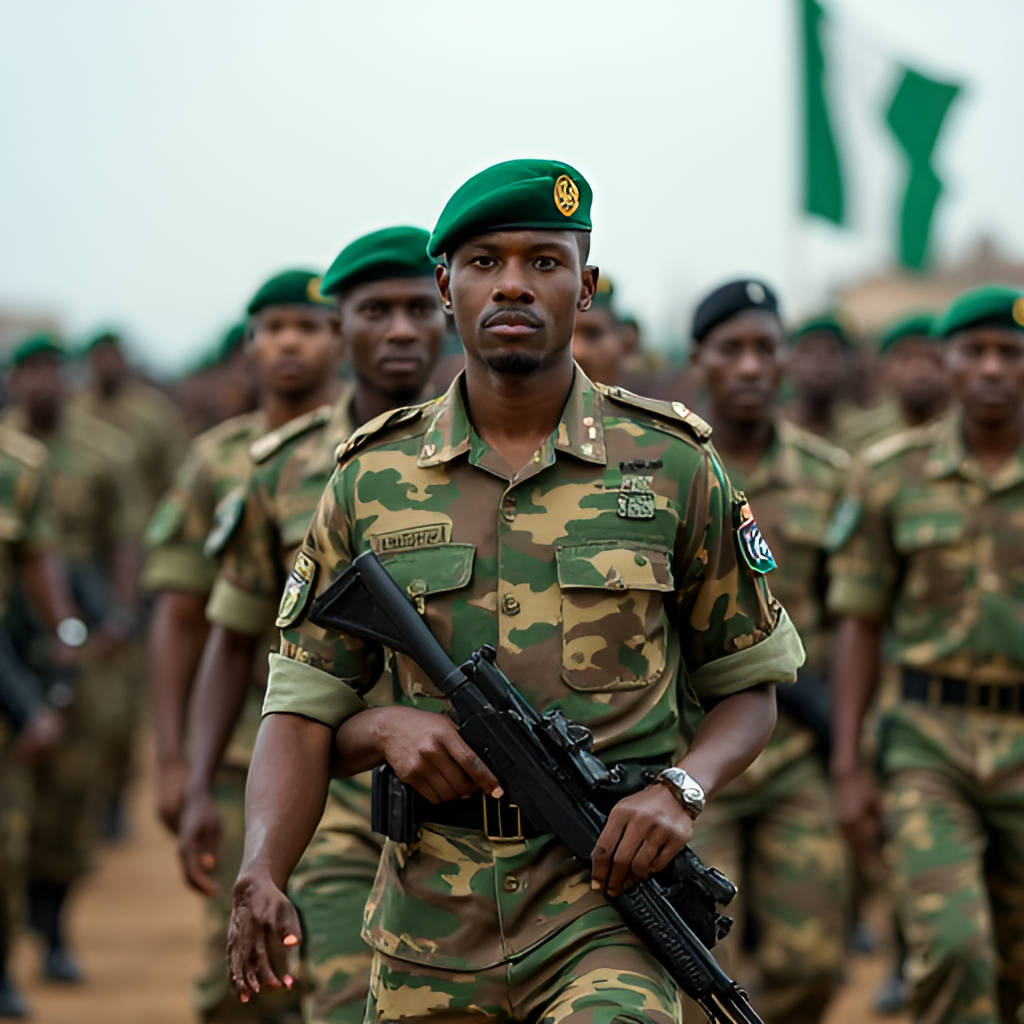
Another vital aspect of their duty is participation in peacekeeping and international missions. Nigeria has a long and proud history of contributing troops to various UN and regional peacekeeping operations across Africa and globally, dating back to the Congo in 1960. They have played prominent roles in missions in Liberia and Sierra Leone, among many others. This commitment to regional and global peace underscores Nigeria’s position as a key player in African security.
This image is a fictional image generated by GlobalTrendHub.
Effective training is paramount for any military, and the Nigerian Army places considerable emphasis on developing its personnel. The Training and Doctrine Command (TRADOC) in Minna is responsible for overseeing doctrinal matters, training programs, and combat development. Various specialized corps have their own training schools, such as the Nigerian Army School of Infantry (NASI) and the Nigerian Army School of Signals (NASS).
From my research, I’ve learned that training encompasses a wide range of skills, from basic weapons handling and fieldcraft for new recruits to advanced counterterrorism tactics and operational planning for seasoned soldiers. The army also sponsors educational institutions like the Nigerian Military School (NMS) in Zaria, which provides academic and military training for younger entrants. Collaboration with international partners, including the United States, is also part of capacity-building efforts, particularly in counterterrorism training.
It’s not just about physical and tactical training; there’s also a focus on leadership development and refining staff duties to enhance operational efficiency. Adequate training and resources are consistently highlighted as crucial for the Nigerian Army to effectively address the security challenges it faces.
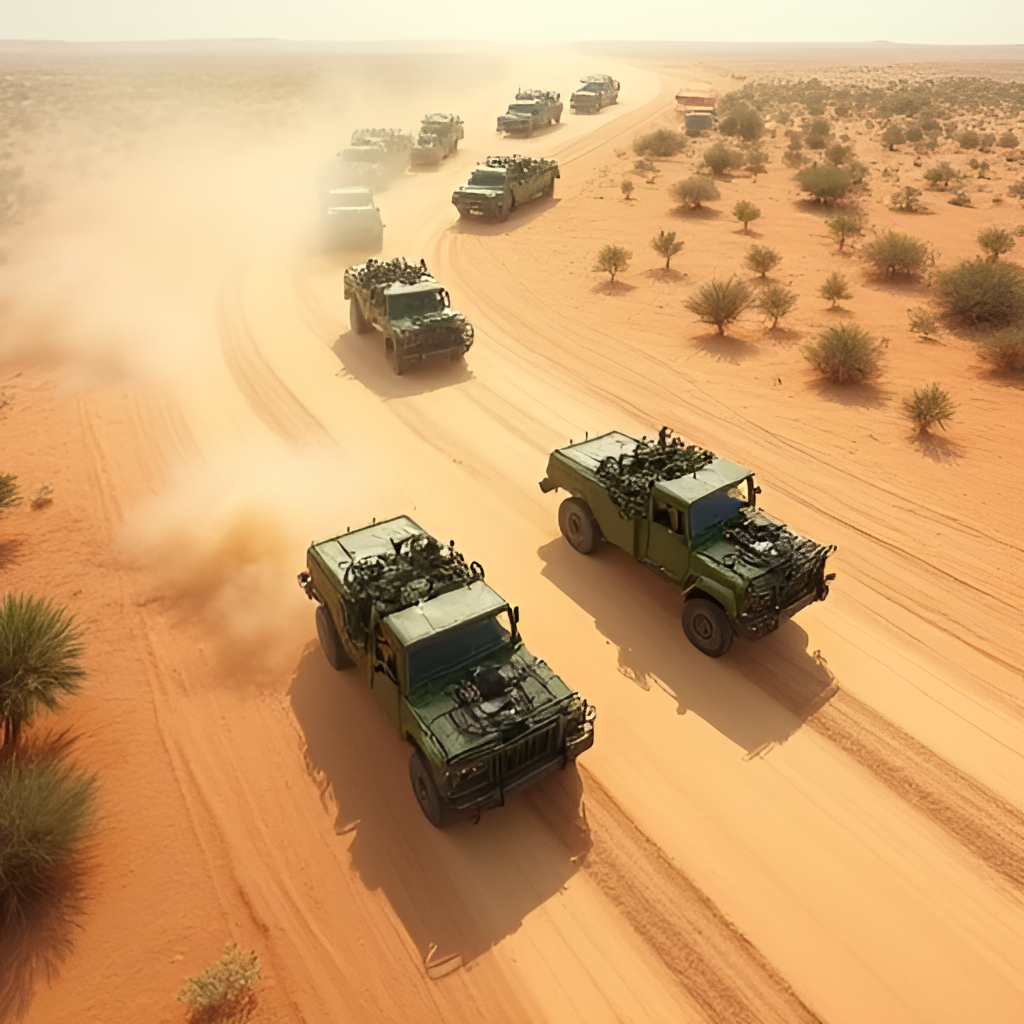
The Nigerian Army operates in a complex and often volatile security environment. One of the most significant ongoing challenges is the insurgency in the North-East, primarily involving Boko Haram and its splinter groups. Counterinsurgency operations in this region have been extensive and demanding, requiring a significant portion of the army’s resources and personnel. This conflict has evolved over the years, forcing the military to adapt its strategies.
Beyond the North-East, the army is also heavily involved in combating banditry, kidnapping, communal conflicts, and other forms of internal unrest across the country. In fact, recent reports indicate a large percentage of the armed forces are engaged in internal security operations across Nigeria’s states. This stretched capacity can pose difficulties.
Funding and resources are also persistent challenges. Inadequate budgetary allocation and delays in fund releases can impact the army’s ability to procure modern equipment, maintain existing assets, and provide necessary welfare for troops. Navigating these challenges while maintaining operational effectiveness is a constant balancing act for the leadership.
This image is a fictional image generated by GlobalTrendHub.
Nigeria’s commitment to international peace and security is clearly demonstrated through its extensive participation in peacekeeping operations. Since the early 1960s, the Nigerian Army has contributed personnel to numerous UN and regional missions across the globe. We’ve seen their presence in places like Congo, Liberia, Sierra Leone, Sudan (Abyei), and many others.
This engagement is rooted in Nigeria’s foreign policy objectives and its role as a prominent nation in Africa. Nigerian troops have often been commended for their bravery, discipline, and professionalism in these demanding environments. While these missions contribute to global stability and enhance the army’s professional capabilities through interaction with other forces, they also come at a significant human and financial cost to the nation.
As someone who believes in collective security, I think Nigeria’s consistent contribution to peacekeeping is a powerful statement about its dedication to a more peaceful world, despite facing significant internal security issues. Deploying troops to help stabilize other nations requires immense commitment and sacrifice.
The Nigerian Army is continuously looking to modernize and enhance its capabilities to meet future security threats. This involves acquiring new platforms and equipment, improving training methodologies, and potentially restructuring to become more agile and technologically advanced. The activation of the Nigerian Army Aviation Corps in 2024, with the acquisition of helicopters, is a recent example of this modernization drive.
Addressing the root causes of internal conflicts, such as socio-economic grievances, is also crucial for long-term stability, and the army’s role often intersects with these broader societal issues. The focus is on transforming the Nigerian Army into a well-trained force capable of handling both conventional and asymmetric warfare.
In conclusion, the Nigerian Army stands as a vital institution at the heart of Nigeria’s security architecture. From its historical roots as the “Glover Hausas” to its present-day role in counterinsurgency and international peacekeeping, the Nigerian military has a complex and challenging mandate. It faces significant internal threats and resource constraints, yet continues to adapt and serve the nation. Understanding the Nigerian Army’s history, structure, roles, and challenges provides a crucial perspective on the security dynamics in Nigeria and the unwavering commitment of its soldiers. It’s an institution with a legacy of gallantry, navigating a volatile landscape to protect the nation’s sovereignty and its people.
Frequently Asked Questions About the Nigerian Army
- What is the primary role of the Nigerian Army? The primary role is to defend Nigeria from external aggression and maintain its territorial integrity, as well as providing support for internal security operations and participating in peacekeeping missions.
- When was the Nigerian Army founded? The Nigerian Army traces its origins back to 1863 with the formation of the “Glover Hausas.”
- How is the Nigerian Army structured? It is organized into operational divisions and functional corps, overseen by the Chief of Army Staff and ultimately the Commander-in-Chief, the President of Nigeria.
- Does the Nigerian Army participate in peacekeeping? Yes, Nigeria has a long history of significant contributions to UN and regional peacekeeping operations worldwide.