Rotimi Amaechi: A Political Journey of Impact and Controversy
- Introduction: The Enduring Figure of Rotimi Amaechi
- Early Beginnings and Rise in Rivers State Politics
- Governor of Rivers State: Development and Political Tussles
- Minister of Transportation: Reviving Nigeria’s Rail Sector
- Navigating the Storm: Controversies and Challenges
- Presidential Ambition and Recent Political Activities
- Rotimi Amaechi’s Place in Nigerian Political History
Rotimi Amaechi is an enduring figure in Nigerian politics, whose career has been marked by significant impact and considerable controversy. Having followed Nigerian politics for years, I’ve seen how individuals like Amaechi shape the national conversation through their actions, ambitions, and the inevitable pushback they face. This article delves into the multifaceted journey of Rotimi Amaechi, exploring his rise from state politics to the national stage, his key achievements, the controversies that have trailed him, and his continued relevance.
Early Beginnings and Rise in Rivers State Politics
Born on May 27, 1965, in Ubima, Rivers State, Chibuike Rotimi Amaechi’s foray into politics began in the early 1990s during the transition to the Third Nigerian Republic. He served as the secretary of the National Republican Convention in his local government area. His early career saw him as a special assistant to the Deputy Governor of Rivers State, Peter Odili, from 1992 to 1994. This period provided him with valuable insights into the workings of state governance and public administration.
Amaechi’s political trajectory gained significant momentum in 1999 when he was elected to the Rivers State House of Assembly, representing his constituency. His colleagues recognized his leadership qualities, and he was subsequently elected as the Speaker of the House, a position he held for an unprecedented two consecutive terms until 2007. During his time as Speaker, he was also elected chairman of the Nigeria Conference of Speakers of State Assemblies, a testament to his influence among his peers.
Governor of Rivers State: Development and Political Tussles
The next significant chapter in Rotimi Amaechi’s career was his governorship of Rivers State from 2007 to 2015. His path to the governorship was quite dramatic, involving a legal battle that went all the way to the Supreme Court. Despite winning the People’s Democratic Party (PDP) primary, his name was substituted by the party. The Supreme Court eventually ruled in his favour, declaring him the rightful candidate and winner of the 2007 election, allowing him to assume office.
As governor, Amaechi’s administration focused heavily on infrastructure development. He initiated projects aimed at constructing roads, bridges, schools, and healthcare facilities across the state. One notable, albeit incomplete, project was the Port Harcourt monorail system, intended to address mass transportation within the capital city. His administration also embarked on power plant projects to improve electricity supply and implemented the Rivers State Sustainable Development Agency (RSSDA) to drive socio-economic growth. Rivers State, under his leadership, was also recognized internationally, being voted the World Book Capital in 2014.
However, his time as governor was not without its political challenges and controversies. He was re-elected for a second term in 2011. In 2013, he was part of a group of seven governors who formed a faction within the PDP known as the G-7. This internal dissent eventually led to Amaechi and five other governors defecting to the newly formed All Progressives Congress (APC) in November 2013. This defection marked a significant shift in his political alignment and set the stage for future political battles, particularly with his successor, Nyesom Wike.
Minister of Transportation: Reviving Nigeria’s Rail Sector
Following the victory of the APC in the 2015 presidential election, in which Rotimi Amaechi served as the Director-General of Muhammadu Buhari’s presidential campaign, he was appointed as the Minister of Transportation. He held this crucial portfolio from 2015 to 2022, overseeing significant projects aimed at modernizing Nigeria’s transportation infrastructure, particularly the railway system.
Under his leadership, several key railway projects were completed or advanced. These include the Abuja-Kaduna standard gauge rail line, the Warri-Itakpe line, and the Lagos-Ibadan standard gauge rail line. The extension of the Lagos-Ibadan line to the Lagos Port Complex was a strategic move to improve port efficiency and decongest access roads. He also championed the construction of the Kano-Maradi standard gauge line and the rehabilitation of the Port Harcourt-Maiduguri narrow gauge line.
Beyond railways, Amaechi’s tenure saw efforts to improve the maritime sector. The launch of the Integrated National Security and Waterways Protection Infrastructure, also known as the Deep Blue Project, aimed at combating piracy in the Gulf of Guinea, was a notable initiative. This project has been credited with a significant decrease in piracy incidents in Nigerian waters. The introduction of the Eto E-Call-Up system at the ports was also implemented to address the chaotic traffic situation caused by articulated vehicles.
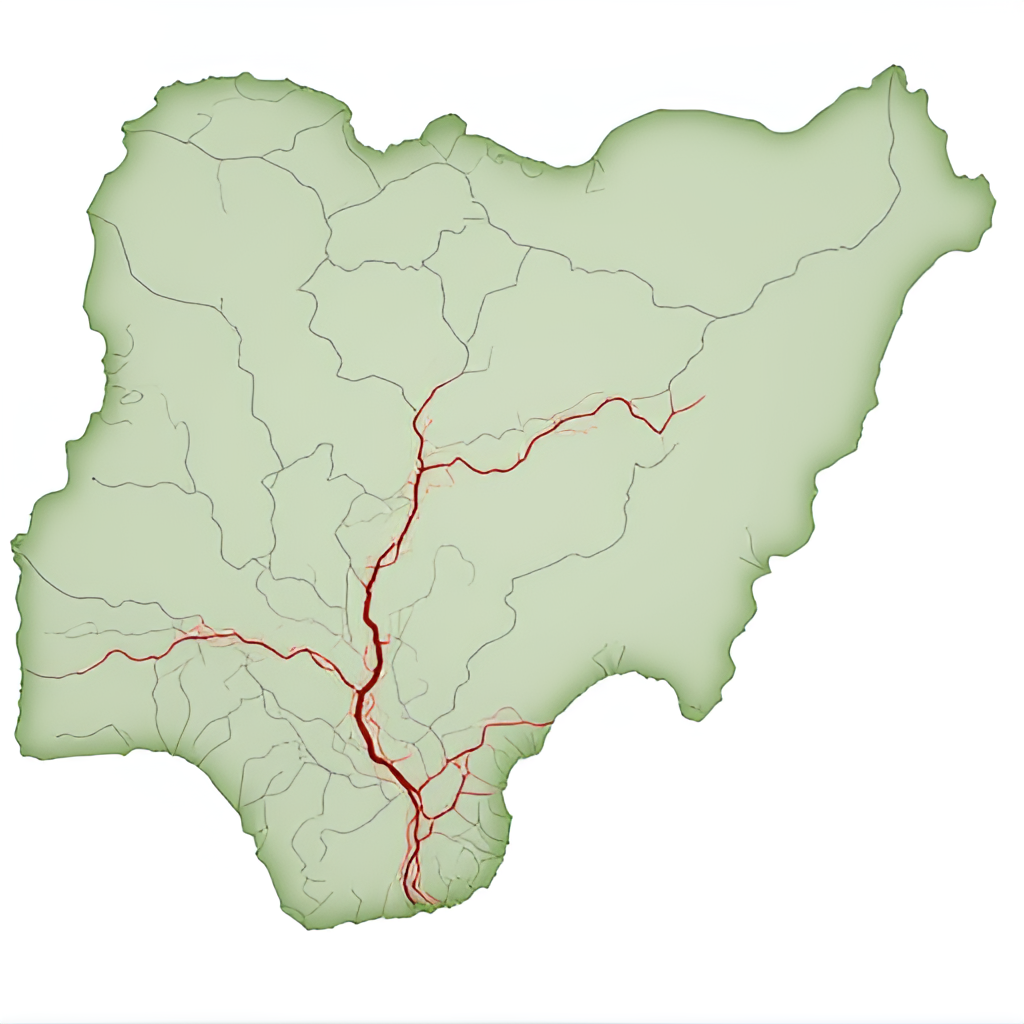
This image is a fictional image generated by GlobalTrendHub.
Achievements in the Maritime Sector
My understanding of the transportation sector suggests that addressing maritime security is paramount for trade and economic growth. The Deep Blue Project, initiated under Rotimi Amaechi, aimed to do just that. Reports indicate a significant reduction in piracy following its implementation. This is a tangible achievement that impacts the safety of seafarers and the cost of doing business in Nigeria.
Additionally, efforts were made to revitalize the Maritime Academy of Nigeria, Oron, which was reportedly facing challenges with accreditation. By setting up an Interim Management Committee, Amaechi’s ministry aimed to restructure and reposition the academy.
However, despite these efforts, his time as Minister also faced criticism. The financing of some major rail projects through substantial Chinese loans raised concerns about Nigeria’s debt profile. There were also controversies surrounding the expenditure of the Deep Blue Project. Furthermore, Nigeria was unsuccessful in securing a Category C Council seat at the International Maritime Organisation (IMO) during his tenure, despite repeated attempts. This highlighted some of the diplomatic and strategic challenges faced within the sector.
Navigating the Storm: Controversies and Challenges
Throughout his political career, Rotimi Amaechi has been no stranger to controversy. His public life has been described as an “intricate dance” and sometimes a “war cry,” marked by forging and breaking alliances. One of the most persistent sources of controversy has been the allegations of corruption leveled against him, particularly by his successor as Rivers State Governor, Nyesom Wike.
These allegations include accusations of misappropriating state funds and fraudulently selling state-owned assets while he was governor. Amaechi has consistently denied these allegations. In 2022, the Supreme Court of Nigeria granted the Rivers State panel of enquiry permission to probe Amaechi over alleged financial impropriety amounting to ₦96 billion.
Beyond financial allegations, Amaechi has also been involved in political disputes and public spats. His strained relationship with Nyesom Wike is well-documented and has contributed to the factionalization of the APC in Rivers State. His public disagreement with the former Managing Director of the Nigerian Ports Authority (NPA), Hadiza Bala Usman, also garnered significant attention and raised questions about his leadership style. Critics have pointed to a perceived sense of hubris and a confrontational approach as contributing factors to some of the challenges he has faced.
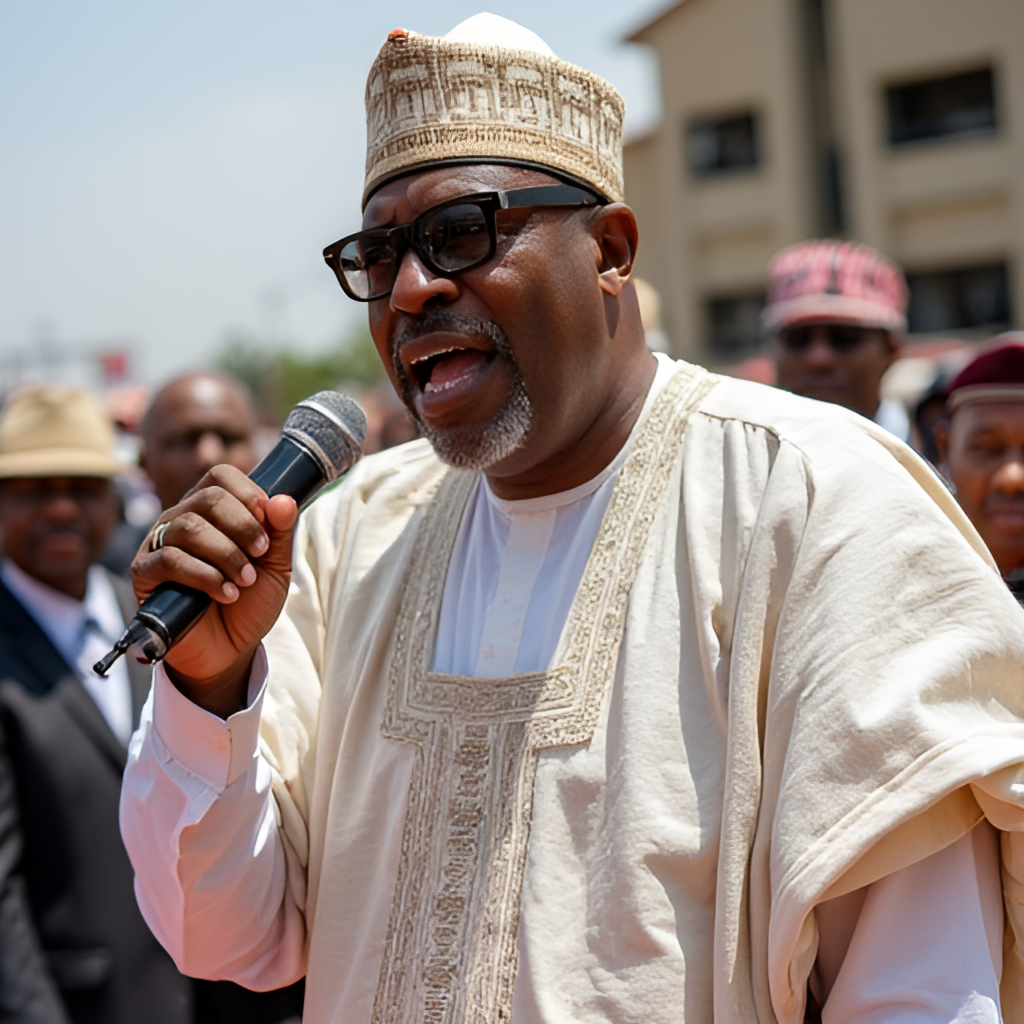
This image is a fictional image generated by GlobalTrendHub.
Political Conflicts and Feuds
It seems that in Nigerian politics, strong personalities often lead to strong disagreements, and Rotimi Amaechi’s career certainly exemplifies this. His defection from the PDP to the APC, while a strategic political move at the time, created deep rifts, particularly in his home state. The ongoing political feud with Nyesom Wike has had a tangible impact on the political landscape of Rivers State, affecting the unity and progress of his party in the region.
His recent comments on Nigerian politicians and their alleged attachment to power have also drawn criticism, with some accusing him of hypocrisy given his own long tenure in public office. These instances highlight the complex and often tumultuous nature of Nigerian politics, where personal relationships and political maneuvering can significantly impact a politician’s journey and legacy.
Presidential Ambition and Recent Political Activities
Rotimi Amaechi has also harbored presidential ambitions. He resigned from his ministerial position in May 2022 to contest for the All Progressives Congress presidential ticket. Despite being considered a strong contender, he placed second in the APC presidential primaries held in June 2022, behind the eventual winner, Bola Ahmed Tinubu.
Following his unsuccessful presidential bid and the end of the Buhari administration, Amaechi has remained politically active, though perhaps less visibly on the national stage. He recently celebrated his 60th birthday with events that drew political figures from across the country. At one such event, he reportedly spoke about his refusal to support Bola Tinubu in the 2023 election, citing concerns about capacity. He has also been critical of the current government, aligning with other opposition figures in what some perceive as a coalition against the present administration.
His continued commentary and participation in political discussions suggest that despite not holding a current public office, Rotimi Amaechi remains a voice to be reckoned with in the Nigerian political space. His experiences as a former Speaker, Governor, and Minister give him a unique perspective, and it’s clear he intends to continue contributing to the political discourse, even if from outside the corridors of power for now.
Rotimi Amaechi’s Place in Nigerian Political History
In conclusion, Rotimi Amaechi’s political journey is a compelling narrative of ambition, service, achievement, and controversy. From his early days as a student union leader and state legislator to his impactful roles as Governor of Rivers State and Minister of Transportation, Rotimi Amaechi has left an indelible mark on Nigeria’s political landscape. While his achievements in infrastructure development, particularly in the railway sector, are widely acknowledged, his career has also been defined by significant political battles and persistent allegations of corruption.
As someone who has observed his career unfold, I see Rotimi Amaechi as a complex figure – a politician who has demonstrated remarkable resilience and strategic acumen, but who has also faced considerable opposition and criticism. His story is a microcosm of the dynamic and often turbulent nature of Nigerian politics, where power, development, and personal rivalries are intricately linked. Regardless of one’s perspective on his political methods or the controversies surrounding him, Rotimi Amaechi’s impact on the sectors he oversaw and his role in significant political transitions are undeniable, securing his place as a notable figure in Nigeria’s recent history.